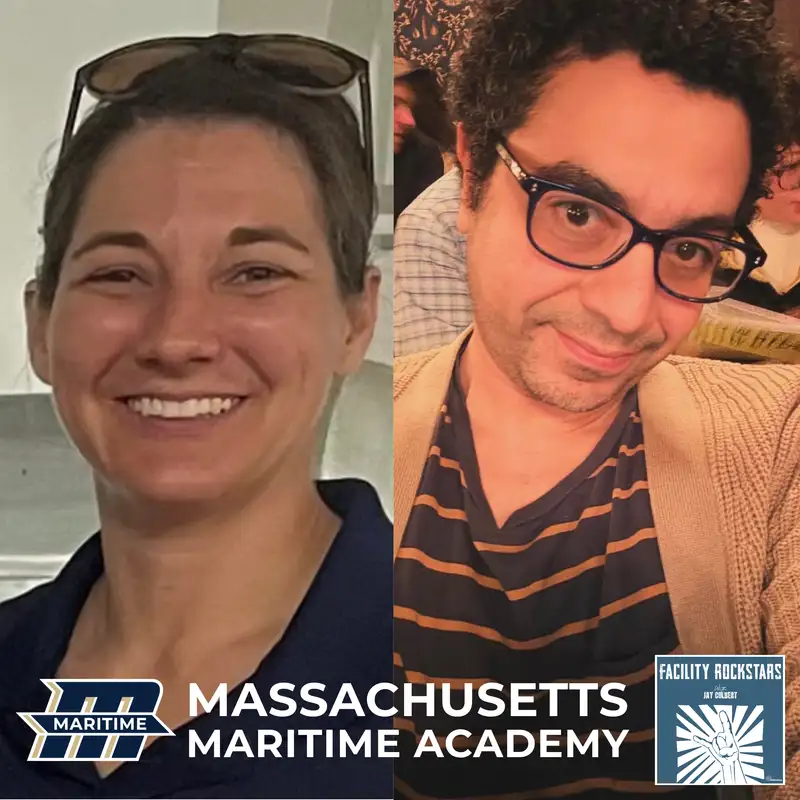
In this second installment of our four-part special series, we go behind the scenes with the faculty and leadership who shape the Massachusetts Maritime Academy experience. Jay Culbert sits down with Chief Engineer Laura Wilcox of the training ship TS Patriot State and Dr. Ashraf Omran, Associate Professor in the Facility Engineering department. Chief Wilcox, calling in live from the Caribbean Sea, describes the immense responsibility of managing an "island" at sea. A vessel that supports 600 cadets and processes its own water, power, and waste while transiting the Panama Canal. She highlights how the ship serves as the ultimate laboratory where cadets transition from classroom theory to real-world operational maintenance.
The conversation also features Dr. Ashraf Omran, a control systems expert with 24 international patents, who discusses the creation of the Academy's world-class Operational Controls Lab. Dr. Omran explains the "Learn, Do, Lead" philosophy that defines the MMA curriculum, emphasizing the importance of troubleshooting and decisive leadership in engineering. Together, they explore how the Academy’s unique regimental structure and immersive labs create a level of professional predictability that makes MMA graduates some of the most sought-after professionals in the facility and marine engineering sectors.
Takeaways:
- Implement "In-Place" Training: Use routine maintenance, like an air compressor oil change, as a real-time teaching moment for junior staff rather than just a task to be completed.
- Master the Noontime Report: Maintain strict accountability for system conditions and fluid quantities through regular, standardized reporting to ensure operational readiness.
- Build Pride through Utility: Recognize that basic tasks like waste management and site cleaning are essential for team safety and building a culture of workplace pride.
- Prioritize Troubleshooting in Professional Development: Move beyond just knowing how a system works; practice diagnosing "glitches" and making independent decisions under pressure.
- Foster Industry Engagement: Bridge the gap between education and the workforce by inviting industry leaders and alumni into your training spaces to share real-world expectations.
- Invest in Experiential Learning (EL): Use field trips and site visits to help early-career professionals distinguish between different facility types, from power plants to biotech labs.
Quote of the Show:
- "We take you from the theoretical all the way through the hands-on, and then to the practical skill and the practical knowledge that you need in order to run a ship, to run a power plant, to run an industrial facility." - Laura Wilcox
Links:
- Laura Wilcox
- LinkedIn: https://www.linkedin.com/in/lwilcox/
- Website: https://www.maritime.edu/directory
- Email: lwilcox@maritime.edu
- Ashraf Omran
- LinkedIn: https://www.linkedin.com/in/ashraf-omran-9572104b/
- Website: https://www.maritime.edu/
- Email: aomran@maritime.edu